
Types of Magic in Fantasy: 40 Kinds by Source and Effect, and How to Build a Magic System
Types of magic in fantasy can be sorted two ways: by where the power comes from, such as talent, study, gods or a pact, and by what it does, such as fire, healing or illusion. A magic system is the set of rules that ties the two together and says what magic costs.
This guide lists 40 kinds of magic along those two lines, explains hard and soft magic, and then walks through the questions you need to answer to build your own system. The worked example is the earth magic in They Say I'm a Dark Mage, but All I'm Good At Is Digging Dirt, the story in TypeTak's Web Novel Course.
At a glance
- Sort magic by source (where it comes from) and by effect (what it does).
- Hard magic has clear rules readers understand. Soft magic stays mysterious.
- The cost and the limits of magic make better stories than the power itself.
- Answer seven questions and your system will hold up for a whole series.
Magic by source
| Type | Where the power comes from | Story angle |
|---|---|---|
| Innate magic | Born with it | Talent against effort, fear of the gifted |
| Learned magic | Study, formulas, practice | Academies, libraries, rivalries |
| Divine magic | A god grants it | Faith, doubt, a god's demands |
| Pact magic | A deal with a spirit or demon | A price that comes due |
| Nature magic | The land, plants, seasons | Wilds against cities |
| Blood magic | The caster's own body | Self-harm, taboo |
| Spirit magic | Spirits that lend their power | Relationships with non-human beings |
| Rune magic | Written symbols | Preparation over speed |
| Ritual magic | Long ceremonies, many people | Cults, timing, plans going wrong |
| Artifact magic | Objects hold the power | Theft, inheritance, wars over items |
Magic by effect
| Type | What it does | Story angle |
|---|---|---|
| Fire | Burns, lights, destroys | Raw power, hard to control |
| Water | Shapes water, ice, mist | Flexibility, healing in some worlds |
| Earth | Moves stone and soil | Building, defense, underrated power |
| Air | Wind, flight, sound | Speed, freedom |
| Lightning | Strikes fast and hard | Precision, danger |
| Light | Illuminates, purifies | Holiness, revelation |
| Darkness | Shadows, concealment | Fear, misunderstanding |
| Healing | Closes wounds, cures disease | Who gets healed and who doesn't |
| Necromancy | Raises and speaks with the dead | Grief, moral gray zones |
| Illusion | Fools the senses | Trust, unreliable scenes |
| Mind magic | Reads or controls thoughts | Consent, privacy |
| Summoning | Calls creatures or objects | Bonds, loyalty |
| Enchantment | Puts magic into things | Crafting, economy |
| Transformation | Changes shape or matter | Identity, disguise |
| Divination | Sees the future or hidden things | Fate, warnings |
| Time magic | Slows, speeds or rewinds time | Paradoxes, loops |
| Space magic | Teleports, folds distance | Logistics, travel |
| Curses | Weakens or harms over time | Slow revenge |
| Protection | Shields, wards, barriers | Sieges, safety |
| Sound magic | Music, voice, silence | Bards, battle songs |
| Gravity magic | Weight and pull | Spectacle, crushing force |
| Plant magic | Grows and shapes plants | Farming, slow power |
| Beast magic | Talks to or commands animals | Companions |
| Weather magic | Rain, storms, drought | Harvests, politics |
| Alchemy | Potions, transmutation | Experiments, trade |
| Sealing magic | Locks away power or beings | Ancient threats |
| Blessings | Brings luck or strength | Subtle, hard to prove |
| Dream magic | Enters or shapes dreams | Secrets, nightmares |
| Memory magic | Erases or restores memories | Lost identity |
| Soul magic | Touches the soul itself | The deepest taboo |
Elements
The classic Western set is four elements: fire, water, earth and air. Many fantasy worlds add light and darkness, and some add lightning, ice or wood. East Asian traditions often use five phases: wood, fire, earth, metal and water, where each one feeds one element and overcomes another.
Pick a set and decide two things: whether a person has one element or several, and whether elements beat each other in a cycle. Both make fights easier to follow.
Hard magic and soft magic
- Hard magic has rules the reader understands: what it can do, what it costs and where it stops. Because the reader knows the rules, a clever use of magic feels earned.
- Soft magic stays mysterious. The reader never learns exactly how it works, so it brings wonder and dread, but it can't solve the plot without feeling like a cheat.
Writer Brandon Sanderson put the trade-off this way: an author's ability to solve conflict with magic grows with how well the reader understands that magic. Most stories mix the two, with hard rules for the hero's magic and soft magic for the old powers at the edges.
Seven questions for your magic system
- Source. Where does the power come from? Who has access to it?
- Cost. What does magic take: energy, health, years of life, money, memories?
- Limits. What can't it do? Limits matter more than abilities, because they force choices.
- Learning. How is it learned, and how long does it take to get good?
- Place in society. Who controls magic? Are mages nobles, soldiers, outcasts, or tools of the state?
- Names. What do people call spells, schools and ranks? A consistent naming style makes a world feel real.
- Taboos. What is forbidden, and why? Forbidden magic is where plots start.
Worked example: earth magic in a world that fears darkness
In They Say I'm a Dark Mage, but All I'm Good At Is Digging Dirt, Clay Rowen is a farm boy with little mana. At the entrance exam for Belkadia Royal Academy of Magic, the judging stone announces his element, and the hall hears “dark magic” instead of “earth magic.” Here's how the seven questions shape that story:
- Source. Each person is born with one element, revealed by the judging stone. So one misheard word can mark a whole life.
- Cost. Mana runs out quickly, and Clay has very little. He can't win with big spells, only with small, clever ones.
- Limits. Earth magic moves soil and stone, nothing more. That limit pushes Clay toward digging, building and farming instead of fighting.
- Place in society. Dark magic is feared, earth magic is looked down on as a farmer's trick. Clay is caught between two kinds of prejudice.
The magic itself is modest. What makes the story is what people believe about it.
Copyable magic system sheet
[Magic system]
Name of the magic:
Source:
Who can use it:
Cost:
What it can't do:
How it's learned:
Ranks or levels:
Elements or schools:
Place in society:
Forbidden magic and why:
Naming style for spells:
Keeping your magic rules straight in TypeTak
TypeTak is an AI writing editor where you write alongside an agent. Use it to set your magic's costs and limits once and keep them from bending in chapter 80.
- Your rules live in one place — the source, cost and limits of your magic sit in your World next to the characters who use it, so you can check a rule without rereading old chapters.
- Spells you invent mid-draft don't slip through — when a new spell or school appears in the manuscript, TypeTak points out that it isn't in your lore yet and files it when you click.
- A broken rule gets flagged — Feedback checks the passage on screen against your lore. If Clay suddenly casts a fireball when you decided each person has only one element, that line shows up on the Consistency card.
For the rest of your setting, see Worldbuilding, the Fantasy Classes List and Fantasy Races.
FAQ
What are the main types of magic?
By effect, the most common are elemental magic (fire, water, earth, air), healing, necromancy, illusion, mind magic, summoning, enchantment and divination. By source, magic is usually innate, learned, divine or granted by a pact.
What is the difference between hard and soft magic?
Hard magic has clear rules, costs and limits the reader understands. Soft magic stays mysterious. Hard magic can solve problems in the plot. Soft magic works best for atmosphere and threat.
How do I create a magic system?
Answer seven questions: where the power comes from, what it costs, what it can't do, how it's learned, who controls it, how things are named and what's forbidden. Limits matter most.
What are the four elements of magic?
In the Western tradition: fire, water, earth and air. Many fantasy worlds add light and darkness. East Asian traditions use five phases: wood, fire, earth, metal and water.
Does every fantasy story need a magic system?
No. Many great fantasy books keep magic rare and unexplained. You need clear rules only when magic solves problems in your plot.
Sources
- Sanderson's First Law
- Brandon Sanderson — Sanderson's First Law
- Classical elements
- Wikipedia — Classical elementWikipedia — Wuxing
Share this post
Write a better opening line with TypeTak, starting today
Get started with TypeTak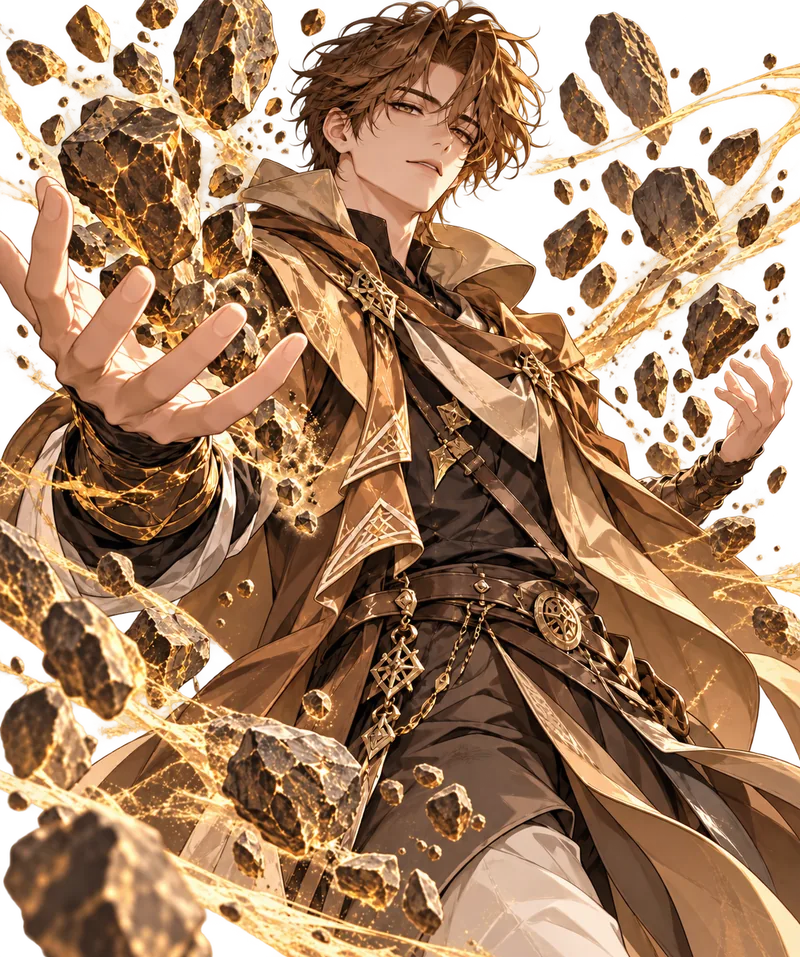
Write a Web Novel, Step by Step
→Follow one web novel, They Say I'm a Dark Mage, but All I'm Good At Is Digging Dirt, from first idea to ready-to-serialize in TypeTak.