
Kishotenketsu: The Four-Act Story Structure vs. Three-Act Structure
Kishotenketsu (kishōtenketsu, 起承転結) is a four-part story structure: you introduce (ki), develop (shō), turn (ten), and bring it together (ketsu). Serial writers can use it at three sizes at once, for the whole story, for one arc, and for a single chapter that has to end on a hook.
If you already know three-act structure, the biggest difference sits in the third part. Three acts build toward a showdown. Kishotenketsu builds toward a turn, and that turn doesn't have to be a fight. This guide covers what the four parts do, where the structure comes from, how it lines up with three acts and Freytag's pyramid, and how to use it on a web serial. At the end you'll find a filled-in example, a template to copy, and the mistakes that come up most often.
At a glance
- Kishotenketsu comes from the way four-line classical Chinese poems were built, and it's used in Korea and Japan too
- Ten is where the direction changes. It can be a new fact or a new point of view, and it doesn't need conflict
- Three-act structure is organized around conflict, in three parts. Kishotenketsu is organized around a turn, in four
- In a serial, the whole story, each arc, and each chapter can get their own four parts, and a chapter's ketsu ends on a hook
What kishotenketsu means: the four parts
Each character names the job of its part.
| Part | Meaning | What it does in a story | Quick example |
|---|---|---|---|
| Ki (起) | to rise, to begin | Shows the characters, their situation, and what starts the story | A poor student walks into a scholarship exam |
| Shō (承) | to receive, to carry on | Picks up what ki started and builds on it | The exam begins, and the other candidates sneer at him |
| Ten (転) | to turn, to roll | Sends the story in a new direction. An unexpected fact or a new angle comes in | The examiner reads his answer sheet and goes pale |
| Ketsu (結) | to tie, to conclude | Takes the new direction from ten and ties everything together | He passes first in his class, and nobody in the room knows why |
The quick examples are scenes made up for this guide. Try writing one sentence per part for your own story. An empty box shows up right away.
Where it comes from: four lines of a Chinese poem
Kishotenketsu started as the order for writing a jueju (絶句), a classical Chinese poem of four lines. The first line was the ki line, the second the shō line, the third the ten line, and the fourth the ketsu line. In Chinese the term is qǐ chéng zhuǎn hé (起承轉合), with a different last character, and English Wikipedia traces the four-part description to the Yuan dynasty writer Fan Peng (范梈, 1272–1330). The structure spread to Korea, where it's called giseungjeongyeol (기승전결), and to Japan, where it's read kishōtenketsu. English borrowed the Japanese name.
TypeTak is a Korean team, so here is a poem Korean students learn in school: “Sending Off a Friend” (送人), written in classical Chinese by the Goryeo poet Jeong Ji-sang. The lines below are a plain English paraphrase.
- Ki: The rain has stopped, and the grass grows thick along the long riverbank (sets the scene)
- Shō: At Nampo I see you off, singing a sad song (carries on with the parting)
- Ten: When will the waters of the Daedong River ever run dry? (the eye moves from the people to the river)
- Ketsu: Every year, parting tears add to its green waves (ties the river and the tears together)
The third line has no new event and no opponent. Only the point of view shifts. Keep that in mind for the section on ten below.
Kishotenketsu vs. three-act structure
Three-act structure divides a story into setup (Act 1), confrontation (Act 2), and resolution (Act 3). Screenwriter Syd Field laid it out in his 1979 book Screenplay, and it's still the most widely taught model for film.
| Kishotenketsu | Three-act structure | |
|---|---|---|
| Number of parts | Four | Three (Act 2 is often split in half) |
| Origin | Four-line classical Chinese poetry | Western drama and Hollywood screenwriting |
| What drives the story | A change in direction | The conflict between what the protagonist wants and what stands in the way |
| Where the biggest change comes | The third part, ten | The crisis at the end of Act 2 and the climax in Act 3 |
| How it ends | Ties the new direction together and leaves an aftertaste | Answers the dramatic question (will they win, will they make it?) |
| Lengths it suits | Short pieces, four-panel comics, single chapters, single scenes | Novels, feature films |
The two overlap a lot. Where they part is the spine: three-act structure carries one question, “Will the protagonist get what they want?”, all the way to the end. Kishotenketsu lets the first two parts build a direction, then swings it hard in the third. Plenty of writers plot the whole novel in three acts and build each arc or chapter inside it with kishotenketsu.
Kishotenketsu vs. Freytag's pyramid
The five-part model many English classes teach (exposition, rising action, climax, falling action, resolution) comes from Gustav Freytag's 1863 study of drama. It tracks conflict as it starts, grows, peaks, and settles. Here is roughly how the three models line up.
| Kishotenketsu | Freytag's pyramid | Three acts | What happens |
|---|---|---|---|
| Ki | Exposition | Act 1 | Characters and setting introduced, the first thread of the story |
| Shō | Rising action | Act 2 | Events grow and the conflict deepens |
| Ten | Climax | End of Act 2 to Act 3 | The biggest change, where the direction flips |
| Ketsu | Falling action, resolution | Act 3 | Loose ends tied up, an aftertaste |
The parts don't match one to one. Some readers put the crisis at the end of shō, others at the start of ten. Freytag's pyramid is handy for reading a finished story and charting how tension rises and falls. Kishotenketsu is handy before you write, when you're deciding which event goes in which box.
Ten is a turn, and it doesn't need conflict
People coming from three-act structure often read ten as “the climax” or “the twist.” That works, but the character actually means “to turn.” As in the poem above, a shift in point of view or situation is already a ten.
This is why so many English articles call kishotenketsu a “structure without conflict.” Three-act structure and the hero's journey are built on conflict. Kishotenketsu doesn't put conflict at the center. As English Wikipedia points out, though, that doesn't mean a kishotenketsu story has no conflict. Conflict can be there, and usually is. The structure simply stands up without it.
Japanese four-panel comics (yonkoma) show this best. Panels one and two set up an ordinary situation, panel three brings in something odd, and panel four connects the two for the laugh. Nobody has to fight for the strip to work. Koichi Hayashida, director of Super Mario 3D Land, has described building its levels the same way: introduce an idea safely, develop it, twist it, then wrap it up.
For a serial writer, this view helps in two ways.
- Not every chapter needs a big fight. Slice-of-life, cozy, and mistaken-identity stories can build a chapter's ten on one misunderstanding or one new piece of information.
- Ten can change the genre. English Wikipedia notes that kishotenketsu can hold a major element back until the third part and use it to shift the story's genre, as when a funny story turns serious at ten.
How to use kishotenketsu in a web serial: three sizes
A web serial on Royal Road or Wattpad goes up one chapter at a time, so kishotenketsu stacks. There's one set of four for the whole story, one for each arc, and one for each chapter. The size changes, but the questions stay the same: What starts it, what carries it on, where does it turn, and what ties it off?
| Size | One part covers | What ketsu looks like | Watch out for |
|---|---|---|---|
| The whole story | One arc, or dozens of chapters | Where the protagonist finally ends up | Keep ki short. Readers decide in the first few chapters whether to keep going |
| One arc | One event, or a few chapters | This arc's business wraps up, and the next arc's opens | An arc's ketsu also works as the next arc's ki |
| One chapter | One scene, a few paragraphs to a few pages | A hook that makes readers click Next | Don't close ketsu with a resolution. Open it with a question |
The biggest change is in a chapter's ketsu. A poem or short story uses ketsu to close. A serial chapter usually doesn't. It wraps up what happened in the chapter, then leaves the new question that came out of it on the last line. That's the hook, or cliffhanger ending, that serial readers expect.
One chapter: splitting chapter 1 into four parts
The example comes from the Write a Web Novel, Step by Step course. Chapter 1 of They Say I'm a Dark Mage, but All I'm Good At Is Digging Dirt, written in Lesson 3, is a Korean web novel chapter of 5,005 characters. About 5,000 Korean characters is the usual length of one Korean installment. On Royal Road, the site's own guidance calls about 2,000 words a good stopping point, so set the length your platform expects. The agent's draft plan had four beats, and they map straight onto kishotenketsu. The length of each part below is an estimate for this example, in Korean characters.
| Part | What happens in chapter 1 | Length (example) |
|---|---|---|
| Ki | Clay, the narrator, arrives at the entrance exam for Belkadia Royal Academy of Magic. White stone walls and glittering noble students stand against his own clothes, which won't stop shedding dust | about 1,000 |
| Shō | Amid whispers of “Isn't he a commoner?”, he takes the mana test. It turns out he's short on mana, and the scorn gets open | about 2,000 |
| Ten | The judging stone announces his attribute aloud. The old stone can't say “earth” properly and slurs it into “Heuk… ma…” (in Korean, “earth magic” and “dark magic” sound alike, which is the whole joke). The hall goes quiet, and scorn flips to fear | about 1,200 |
| Ketsu | The proctor orders the dark magic aptitude procedure to begin. The chapter ends on Clay asking, “Did you just… say my attribute is dark magic?” | about 800 |
At ten, Clay's ability stays exactly where it was. What changes is how everyone sees him, and a single garbled sound does it. Ketsu leaves the misunderstanding standing and cuts off the moment it begins, so chapter 2's ki is already waiting: what happens with this mistake?
One arc: four event cards in four boxes
Arc 2, “Settling in and rising status,” on the course board has four event cards. Put them in order, and they form the arc's kishotenketsu.
- Ki (Event 2.1): The first research assignment. The academy becomes the stage, and Clay gets a task
- Shō (Event 2.2): The first public practical. He uses earth magic in front of everyone, and his reputation starts to climb
- Ten (Event 2.3): Earth magic sparks a major dark magic misunderstanding. Whispers about one student become an academy-wide affair
- Ketsu (Event 2.4): The conflict over the lab. Arc 2's rise ends in a lab of his own, and the fight over it carries into the next arc
The whole story: three arcs and an ending
For the whole story, the board's three arcs become ki, shō, and ten, and the ending becomes ketsu. The course hasn't settled the ending yet, so this guide sets one for the example, along with the chapter ranges.
Kishotenketsu example: They Say I'm a Dark Mage, but All I'm Good At Is Digging Dirt
| Part | Board | What happens | Where Clay stands |
|---|---|---|---|
| Ki (ch. 1–15, example) | Arc 1: Early misunderstanding and admission | Clay, scorned as a commoner, gets into the academy as a special dark magic admission after the judging stone's garbled announcement | Scorned commoner → the dark mage everyone fears |
| Shō (ch. 16–95, example) | Arc 2: Settling in and rising status | The academy has no tower for earth magic. Every time he patches a cracked wall or hauls supplies with a soil golem, the academy trembles at “major dark magic.” Seraphine pushes riskier tests on him, and Lucian picks more reckless fights | The higher his reputation climbs, the further he drifts from the ordinary job he wants |
| Ten (ch. 96–135, example) | Arc 3: Traces of real dark magic | Strangely rotten soil turns up near the academy. Land Clay restored rots again a few days later, and the academy suspects “Clay the dark mage” | The misunderstanding turns from a joke into a danger |
| Ketsu (ch. 136–150, example) | Ending (example) | Clay shows that land rotted by dark magic can only be restored with earth magic, and he saves the soil of the royal capital. A sixth tower for teaching earth magic goes up, and Clay becomes its first research student | Recognized as an earth mage, though students still call it the “Dark Tower” |
This story's ten is where traces of Barkan Rest, the real dark mage, show up for the first time. The same misunderstanding that made the jokes through ki and shō turns dangerous, which is the genre-shifting ten described earlier.
So that ten doesn't feel sudden, plant clues before it. Here the detail that “soil Clay restored rots again a few days later” does that job.
Kishotenketsu template to copy
Copy the box below into a notes app or document and fill it in from the biggest size down: the whole story, then the arc you're writing, then your next chapter. For each part, write both “what happens” and “what changes afterward,” and shō won't turn into the same event on repeat.
[Whole story]
Title:
Ending in one line: (what does the protagonist gain or lose at the end?)
Ki (ch. ___–___): what happens / where the protagonist stands
Shō (ch. ___–___): what happens / where the protagonist stands
Ten (ch. ___–___): what turns the story / clues to plant earlier
Ketsu (ch. ___–___): how it ties off / where the protagonist ends up

[This arc]
Arc title:
Ki: event / what changes afterward
Shō: event / what changes afterward
Ten: event / what changes afterward
Ketsu: event / what carries into the next arc

[This chapter]
Chapter number and target length: (ch. ___, about ___ words)
Ki: scene
Shō: scene
Ten: the moment the direction changes
Ketsu: the last line or scene to leave as the hook
Once the template is full, read only the ten lines. If all three sizes answer “what changes?”, the skeleton is in place.
Common mistakes
Ki runs long. If you show all the lore before anything happens, serial readers won't stay until ten. Keep the whole story's ki short, and finish a chapter's ki within a few paragraphs.
- Before: Chapters 1–3 introduce Clay's life back home, the Kingdom of Ravien's magic hierarchy, and the history of the five towers, one after another. The entrance exam starts in chapter 4.
- After: The first paragraph of chapter 1 shows his worn clothes outside the exam hall, and chapter 1 gets all the way to the judging stone's “Heuk… ma….” Home and the magic hierarchy come out a line at a time inside the scenes where he's scorned.
Shō repeats the same event. If “he uses earth magic, everyone is stunned” happens ten times, the events add up but the story stands still. Each event in shō should move the protagonist's situation one step.
- Before: Clay patches a wall, and everyone gasps at the dark magic. Clay fixes a flowerbed, and everyone gasps. Clay builds a golem, and everyone gasps.
- After: When he completes his first research assignment, he's offered a special scholarship and his own lab. After the public practical, Lucian challenges him. After the dark magic uproar, a fight breaks out over the lab.
Ten goes off anywhere. If a new villain or a new power pops up in the third part with nothing set up, readers see the author's convenience. Leave a small trace in an earlier part of whatever ten will reveal.
- Before: In the first chapter of Arc 3, Barkan, a dark mage nobody has heard of, appears and attacks the academy.
- After: Midway through Arc 2, one line notes that the flowerbed soil Clay restored has gone dark again a few days later. When rotten land turns up in Arc 3, readers remember that scene. (The flowerbed scene was made up for this guide.)
A chapter's ketsu closes with a resolution. That's fine in a short story. In a serial, a chapter that ends neatly gives readers less reason to click Next.
- Before: Clay explains that the judging stone is old and slurs its words, and the proctor laughs and corrects the record to earth magic.
- After: The proctor orders the dark magic aptitude procedure, and the chapter cuts off on Clay asking, “Did you just… say my attribute is dark magic?”
Laying out events with kishotenketsu in TypeTak
TypeTak is an AI writing editor where you write alongside an agent. On a World board, make four groups named Ki, Shō, Ten, and Ketsu and place your event cards in order. Each card gets a group.order number like Event 2.3, so you can see which part of the story it belongs to. Drag a card to another group, and its number follows, so you can try pulling ten earlier or stretching shō just by moving cards. Attach a card like “Event 3.1” to an entry in a character's Progression, and you can follow how that character changes at ten by the same number. When you write a chapter, rename the four beats on the agent's draft plan card to ki, shō, ten, and ketsu, and let it write from there.
FAQ
What does kishotenketsu mean?
It's four characters for four steps: ki (起, begin), shō (承, carry on), ten (転, turn), and ketsu (結, tie together). The name is the order itself. In Chinese the last character is 合 (combine), and in Korean the same structure is called giseungjeongyeol.
Is kishotenketsu Japanese or Chinese?
Both, in a way. The structure began with classical Chinese poetry and spread to Korea and Japan. The word English uses, kishōtenketsu, is the Japanese reading of the characters.
What's the difference between kishotenketsu and three-act structure?
Three-act structure divides a story at the points where the protagonist's conflict starts, grows, and resolves. Kishotenketsu divides it into four around a turn in the third part, which can be a new fact or a new angle as easily as a fight. Many writers use three acts for a whole novel and kishotenketsu for arcs and chapters.
Can you give an example of a kishotenketsu story?
Four-panel comics are the clearest example: setup, development, an odd third panel, and a punchline that ties it together. Among films, Studio Ghibli's My Neighbor Totoro is often cited. The chapter 1 breakdown above shows it inside a single serial chapter.
Does every chapter of a web serial need kishotenketsu?
No. But if you split a chapter into four beats and turn the direction once in the third, the last beat becomes much easier to write as a hook. In a serial, a chapter's ketsu opens the next chapter's question instead of closing the story.
Sources
- Kishotenketsu definition and origin
- Wikipedia: KishōtenketsuWikipedia (Korean): 기승전결
- Three-act structure and dramatic structure
- Wikipedia: Three-act structureWikipedia: Dramatic structure
- Serial chapter length
- Royal Road: Chapters
Share this post
Write a better opening line with TypeTak, starting today
Get started with TypeTak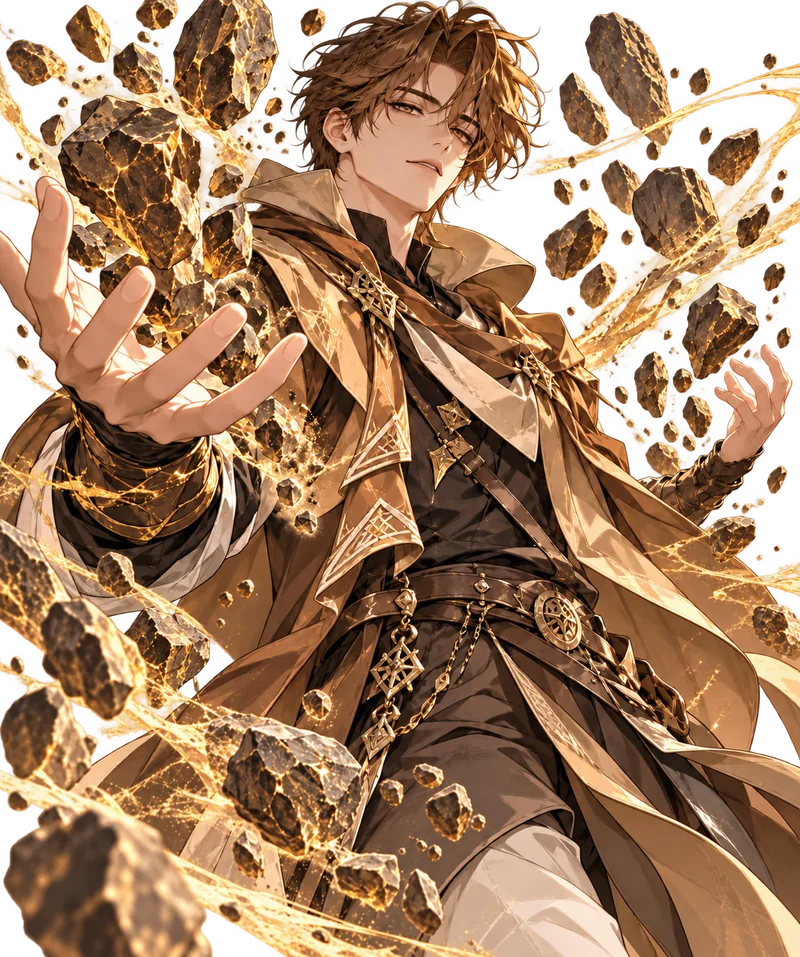
Write a Web Novel, Step by Step
→Follow one web novel, They Say I'm a Dark Mage, but All I'm Good At Is Digging Dirt, from first idea to ready-to-serialize in TypeTak.