
AI writing prompts for fiction: copy-and-paste prompts for ChatGPT, Gemini, and Claude
An AI writing prompt for fiction is the message you send to an AI chat like ChatGPT, Gemini, or Claude when you hand it part of your story work. What changes the output most is how much of what you've already decided (the lore, the length, the point of view, the scene to end on) you put in the prompt. A tone or a role like “you are a bestselling author” matters far less.
This post collects copy-and-paste prompts for each stage: brainstorming, chapter plans, drafts, continuing a serial, and revision. It also includes a story summary template that keeps the AI from losing track of your lore as chapters pile up, and one-line fixes for when the output goes wrong. The example is They Say I'm a Dark Mage, but All I'm Good At Is Digging Dirt, the story from TypeTak's course Write a Web Novel, Step by Step. It's a Korean web novel written in Korean; the examples below are translated.
At a glance
Write a one-page story summary first and paste it at the top of every prompt. Ask for one thing per prompt, and get a plan before you ask for prose. When the output misses, adding one line about what went wrong works faster than asking for a full rewrite.
| Stage | Prompt | What the AI does |
|---|---|---|
| Setup | Story summary | (You write this) |
| 1 | Expand an idea | Five directions from one line |
| 2 | Voice samples | Each character's lines in the same situation |
| 3 | Find the gaps | Points out what will stall the serial |
| 4 | Chapter plan | Scene order and the closing scene |
| 5 | Chapter draft | Writes one chapter to the plan |
| 6 | Continue | Picks up from the last scene |
| 7 | Revision | Lines to fix, why, and replacements |
| 8 | Proofreading | Fixes typos, leaves the content alone |
Five things to put in a prompt
Send “write chapter 1 of a fantasy web novel” and the AI fills every blank with the most common choice. That's where the stock names, stock plots, and stock sentences come from. Adding “you are a bestselling author” doesn't change the fact that the AI has never seen your story. Fill in these five and there's less for it to guess.
| Include | Example | Without it |
|---|---|---|
| Story basics | Genre, audience, tone | You get the genre's most generic version |
| Lore you've settled | Characters, world, plot so far | It invents new names, powers, and relationships |
| One task | “Only the plan for chapter 3” | It writes the plan and the prose at once, both thin |
| Format | Length, POV, tense, dialogue share | It summarizes instead of dramatizing, or the POV drifts |
| What not to do | “Don't reveal who he really is yet” | It spills the twist you were saving |
Only the task and the format change from prompt to prompt. The story basics and the lore you write once and paste. That's the story summary in the next section.
Write this first: the story summary
An AI chat may not carry the lore from one conversation into a new one, and in a long conversation it can lean less on what you settled near the start. You may not notice for the first ten chapters, but as they pile up, a character's voice or powers start to drift. So keep the lore out of scattered chats, put it on one page, and paste it at the top of every request.
[Story]
Title:
Genre and tone:
Audience:
Chapter length and POV:

[Main characters]
Name / one line / how they talk / what they want right now

[Plot so far]
(one line per chapter)

[Lore to keep]
(limits on powers, rules of the world, facts that can't change)

[Not revealed yet]
(things neither the reader nor the characters know yet, so the AI doesn't bring them up first)
The last section is the one people skip. If the twist or the hidden identity isn't written down, the AI doesn't know it. If you mix it into the lore, the AI treats it as fair game for this chapter. A separate “Not revealed yet” section lets the AI know without using it.
Here it is filled in for They Say I'm a Dark Mage, but All I'm Good At Is Digging Dirt. The characters and plot are as the course set them; the tone and POV are chosen for this example. In Korean, “earth magic” and “dark magic” sound the same, and that's the whole joke.
[Story]
Title: They Say I'm a Dark Mage, but All I'm Good At Is Digging Dirt
Genre and tone: Fantasy academy story, comedy of mistaken identity. Deadpan.
Audience: Web serial readers
Chapter length and POV: About 5,000 Korean characters (the Korean serial norm), close third person on Clay

[Main characters]
Clay Rowen / A commoner who can only do earth magic but is taken for a dark mage / Polite to superiors, repeats the question when startled / Wants a license and a steady job to support his family
Seraphine Mordell / Dark magic professor / Takes Clay's “it's just earth magic” as modesty / Wants to test his power
Lucian Carven / Noble rival / Competes with Clay while scared of him / Wants to beat Clay and save face
Mia Toren / Friend / The only one who knows Clay's real affinity / Cleans up each time the misunderstanding grows

[Plot so far]
Chapter 1: An old judging stone can't read “earth” properly and announces “Dar… k…”, and Clay is admitted as a special dark magic student

[Lore to keep]
Clay can't use dark magic. Everything he does is earth magic; people only mistake it for dark magic
None of the five towers of the Belkadia Royal Academy of Magic teaches earth magic

[Not revealed yet]
A real dark mage who rots the land exists
The summary doesn't have to be complete on day one. After each chapter, add a line to “Plot so far” and move any newly settled lore into its section.
Prompts for each stage
Every prompt below assumes the story summary is pasted above it. Swap in your own details where you see parentheses.
1. Expand an idea
Give me five directions for a web serial based on this one-line idea.
Idea: (one line)

Rules:
- The five should differ in genre or tone
- For each, write one sentence on the loop that produces a new event every chapter
- Don't write long lore lists. Five lines max per direction
A serial needs a new event every chapter, so pick the direction with a repeatable loop over the one with the flashiest lore. For this story the loop is: Clay solves an everyday problem with earth magic → it looks like dark magic → everyone gets more afraid of him. Move the direction you choose into the summary before going on.
2. Voice samples
Write what each of these (three) characters from the summary says when they run into the same situation.
Situation: (e.g., late for class, they run into the professor in the hallway)

Rules:
- Three lines of dialogue per character
- Keep each character's voice from the summary; don't let the three blur together
- After each set, one line on why it's in character
Putting several characters in one situation shows the difference in voice more clearly than role-playing them one at a time. When a line lands, copy that verbal habit into the character's “how they talk” in the summary, and later drafts will blur the voices less.
3. Find the gaps before you start posting
Don't invent new lore. Look at the story summary and find only what's missing for keeping the serial going.

Point out where these four questions have no answer or a weak one:
1. What does the protagonist have to do right now?
2. Who is working hardest to stop them?
3. What does the protagonist lose if they fail?
4. How does this event lead to the next big one?

For each gap, suggest two or three ways to fill it. I'll pick.
Ask “develop the world more” and the AI keeps adding names, places, and history. A serial usually stalls because nothing is about to happen next, not because the world is too thin. Opening with “don't invent new lore” keeps the answer on the gaps.
4. Chapter plan
Plan chapter (N) only. Don't write the prose yet.

- Length: (about 5,000 characters)
- What happens: (one or two lines)
- Closing scene: (the moment that makes readers click next)

Break it into scenes in order. For each scene, list who's in it, what happens, and roughly how long it runs.
Flag anything in the plan that conflicts with the story summary.
A plan is easier to fix. Reordering scenes in a finished chapter means rewriting it; in a plan you move a line. Check two things here: that the length is spread sensibly across scenes, and that the last scene cuts off in the middle of the action.
5. Chapter draft
Write chapter (N) following the plan above.

- Length: (about 5,000 characters)
- POV: (close third on Clay), past tense
- Don't summarize scenes. Show them through dialogue and action
- Don't name characters' emotions with adjectives
- Don't end with a lesson or a preview of the next chapter. Stop at the closing scene in the plan
- Don't reveal (what's not revealed yet) in this chapter
The “don't” list grows with every story. When something in a draft bugs you, add a line for it from the next chapter on. To match your style, paste a paragraph or two you like from an earlier chapter and write “in the same style as this.” That works better than describing your style in words.
6. Continue to the next chapter
Below is the last scene of chapter (N). First, plan chapter (N+1) starting right after it.

--- Last scene of the previous chapter ---
(the last 1,000 characters or so)
--- End ---

What happens in chapter (N+1): (one or two lines)
Carry over the time, place, and each character's state from the scene. Don't open by recapping the previous chapter.
Paste the last scene, not the whole previous chapter. The plot so far already lives in the story summary, and the last scene is enough to carry the rhythm. Once you have the plan, go on as in steps 4 and 5.
7. Revision
Find what needs fixing in the manuscript below. Don't rewrite the whole thing.

For each fix:
- The original sentence, verbatim
- Why it needs fixing, in one line
- A replacement

(Put anything that conflicts with the story summary at the top, in its own list.)

--- Manuscript ---
(manuscript)
Ask the AI to “polish this” and it hands back a full rewrite. It's hard to see what changed, and your sentences turn into its sentences. Getting original, reason, and replacement as separate pieces lets you take only the fixes you agree with. If you want the big picture first (what works, what doesn't), start with the prompts in How to Get Honest AI Feedback on Your Novel.
8. Proofreading
Fix only spelling, punctuation, and grammar in the manuscript below.
Don't change sentence structure, word choice, or style. Keep characters' dialect and verbal tics as they are.
List only the changes, as “original → fixed”.

--- Manuscript ---
(manuscript)
Say what not to touch first, so the AI doesn't flatten dialogue quirks and deliberate fragments into textbook prose.
Stop pasting the summary every time
All three services have a place outside the chat for instructions and files. Put the story summary there once and you won't need to paste it into every conversation you start from that place.
| Service | Where to put it | What goes in |
|---|---|---|
| ChatGPT | Projects | The summary file, plus project instructions (style, what not to do) |
| Gemini | Gems | The summary and your rules in the Gem's instructions |
| Claude | Projects | The summary file in project knowledge, plus instructions |
ChatGPT's custom instructions apply to every chat, so use them for preferences that fit any story, like “write dialogue with contractions,” not for one story's lore. With any of the three, when the lore changes you update the stored file yourself. Adding a line to “Plot so far” at the end of each chapter keeps the updates from piling up.
One-line fixes for when the output misses
Asking for a full redo changes the parts that worked along with the parts that didn't. Add one line about what went wrong and get just that part again.
| When this happens | Add this line |
|---|---|
| It contradicts the lore | “If any sentence would conflict with the story summary, tell me before you write it” |
| It summarizes a scene | “Write this scene out in dialogue and action, at least (1,500 characters)” |
| Everyone sounds the same | “Keep each character's voice from the summary. I should know who's talking from the line alone” |
| Every chapter ends on a lesson | “Cut the last paragraph off mid-scene. No wrap-up sentences” |
| It reveals the twist early | “Don't reveal (that fact) before chapter (N). No hints either” |
| The style shifts between chapters | Paste a paragraph from the last chapter and add “in the same style as this” |
| You asked for fixes and got a rewrite | “Keep as much of the original as you can, and show only the changed sentences next to the originals” |
Lines you keep adding belong in the summary's “Lore to keep” or in the service's instructions.
Writing without pasting your lore in TypeTak
TypeTak is an AI writing editor where you write alongside an agent. It does what the prompts in this guide were for, pasting in a story summary to get the next chapter, with one short request.
- No pasting your lore every time. Once characters, places, and events are kept in one place, even a short request like “write chapter 3” is enough for the agent to look up what that chapter needs.
- See the plan before the prose. Before it writes, the agent shows you the next chapter's outline first and writes from the outline you edited.
- New lore carries into the next chapter. Lore you settle in chat goes in when you ask it to organize, so you're not hand-editing a lore document.
- Requests you use often are one call away. Save the prompts you use often and call them in chat with “/”.
To walk through the whole thing from ideation to revising chapter 1, start with Write a Web Novel, Step by Step.
FAQ
Which is best for fiction: ChatGPT, Gemini, or Claude?
The prompts in this post work as-is in all three. They differ in how their prose reads and how they handle lore, so the surest way to choose is to draft a chapter in each with the same summary and the same prompts. For a comparison of AI tools by lore memory, drafting, and revision, see Best AI for Writing a Book.
Are longer prompts better?
A long story summary is fine, but give one task per prompt. “Plan it, write chapter 1, and give me ten titles” makes each part thinner. Sending the tasks one at a time also makes each result easier to fix.
Can I post a story I wrote with AI?
Platforms and contests set their own rules. We've collected the main ones in Can You Use AI to Write a Book?.
Sources
- Gemini
- Use Gems in Gemini Apps
- Claude
- What are projects?
Share this post
Write a better opening line with TypeTak, starting today
Get started with TypeTak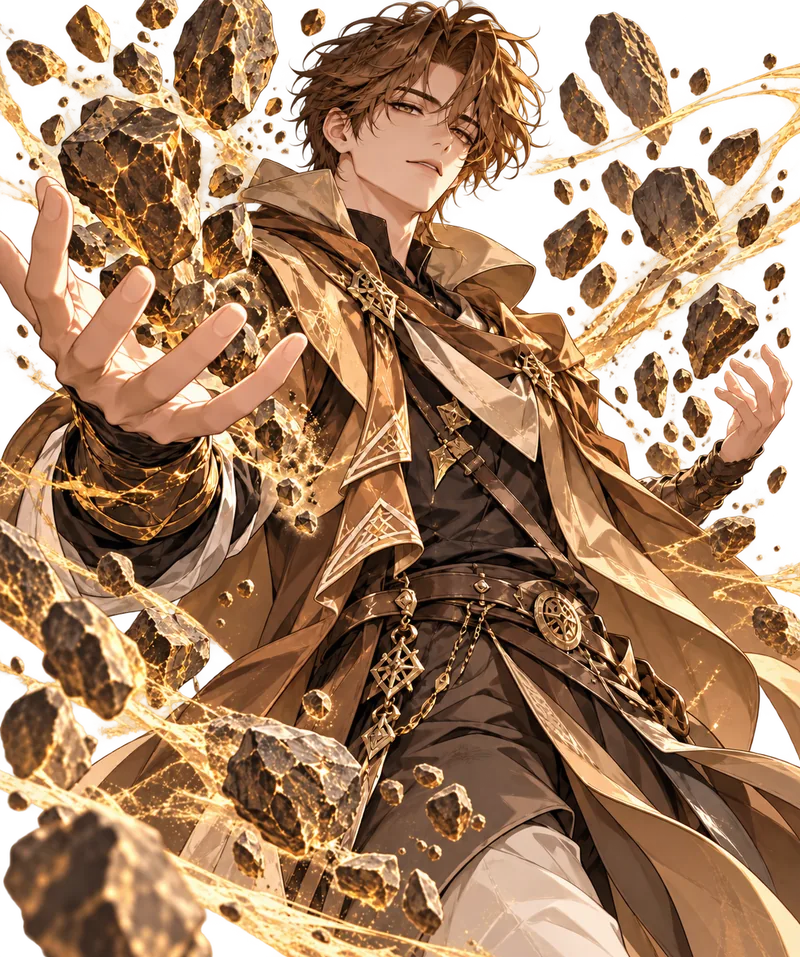
Write a Web Novel, Step by Step
→Follow one web novel, They Say I'm a Dark Mage, but All I'm Good At Is Digging Dirt, from first idea to ready-to-serialize in TypeTak.